 Chapter 11 focuses on methods for providing support for struggling readers. The authors include six major strategies: create supportive relationships, model thoughtful reading, promote self-monitoring, use materials students can successfully read that also still pose a challenge, build engagement with the text, provide books and materials in various formats. Out of these strategies, what struck me the most was the importance of choosing materials students can successfully read. As teachers, we want to pull resources that are fun and engaging for the students. However, the entire point of outside resources in the classroom are for students to grasp a better understanding of the content in class. To cater to all students, we must choose resources that are not too challenging for our students that struggle with reading, but are also challenging enough to push them to grow in their understanding. The authors plainly say, "if a student can't read the material, he can't get anything out of it" (284). Learning about this strategy has reinforced the idea of intentionality with resources in the classroom. To achieve this, one must first know their students in order to gage what is too easy or too hard for them to understand. Secondly, I believe we as teachers must come up with creative strategies to explain the purpose of the resources selected and what we want our students to get out of it. One strategy mentioned in the chapter that I see myself using in the future is the three-column sheet.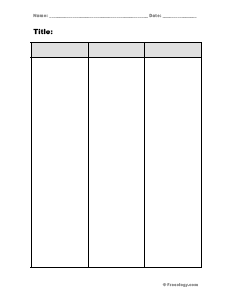
The first column is used for vocabulary terms and important quotes, the second for what the student knows, and the third for questions the student has as they read the resource. I think this is an effective strategy for helping students better comprehend a given resource, especially for struggling readers.
Word Count: 297
Comments
Post a Comment